

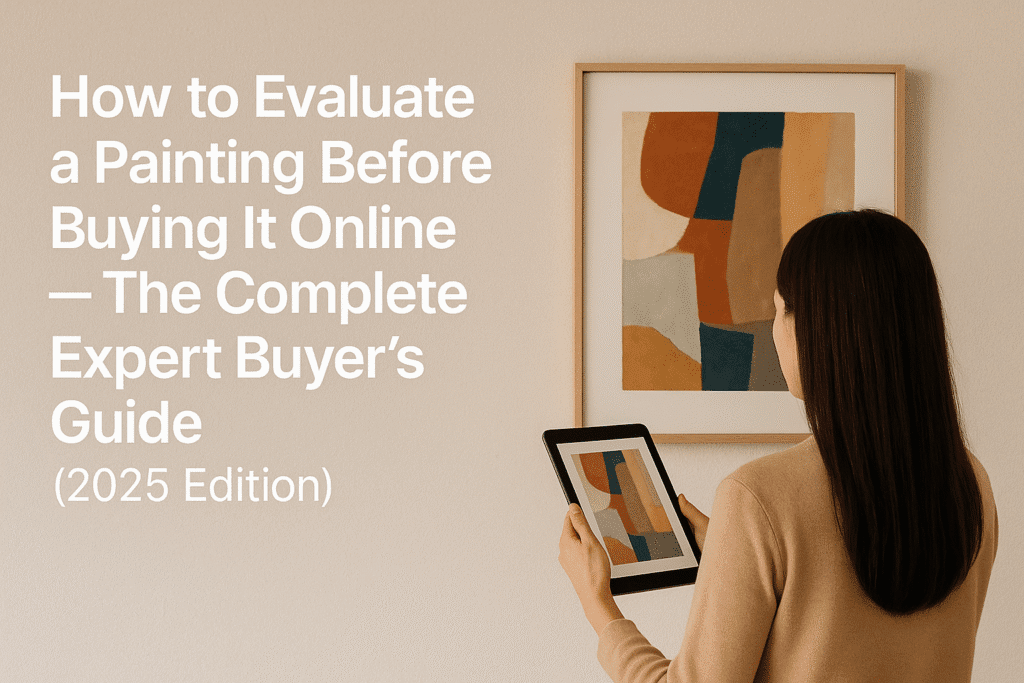
Buying art online has become normal, but for most collectors – especially first-time buyers – it is still intimidating. You’re trusting a screen to show you something you will see every day on your wall. Colors, textures, authenticity, price justification..… all of it matters.
This guide is designed to make you an informed buyer. Whether you’re exploring emerging artists, contemporary paintings, or investment-worthy originals, these are the exact principles professionals use to judge a painting before they buy.
1. Start With the Artist’s Background and Intent
A painting’s value is closely tied to the artist behind it.
What to check:
- Artist biography
- Years of experience
- Education or training
- Exhibitions, awards, recognitions
- Signature style or themes
- Consistency across their portfolio
Why it matters:
A skilled and evolving artist creates work with longevity, rarity, and concept – crucial factors for both aesthetic and investment value.
Red flag:
No clear identity, no past work samples, and inconsistent artistic voice.
2. Examine the Painting’s Medium and Materials
Different mediums age differently, hold color differently, and influence price.
Common mediums & what they imply:
| Medium | Longevity | Detail Quality | Price Expectation |
|---|---|---|---|
| Acrylic on Canvas | High | Clean, vibrant | Medium |
| Oil on Canvas | Very High | Rich texture | High |
| Watercolor on Paper | Moderate | Gentle, soft | Low to Medium |
| Mixed Media | Varies | Experimental | Medium to High |
| Digital Prints | Depends | Flat | Low |
Why it matters:
Acrylic and oil are better for long-term display and resist fading.
Watercolors need framing behind glass.
Mixed media requires clear material details.
3. Evaluate Size, Dimensions, and Composition
A painting’s dimensions affect:
- Visual impact
- Suitable wall placement
- Price structure
Ask yourself:
- Does the size fit the room’s scale?
- Is the composition balanced or suitably expressive?
- Does the artwork fill the frame or intentionally use negative space?
Professional tip:
Hold your phone 6-8 feet away from the screen to simulate in-room viewing.
4. Judge Color Accuracy and Mood
Colors on screens can mislead – but good photographs reduce this risk.
Look for:
- Multiple photos (daylight, close-up, angled)
- Accurate skin tones, earth tones, or natural hues
- Whether the artwork’s mood matches your space and intention
Why mood matters:
Art influences the emotional atmosphere of a room.
For example:
- Cool blues → calming
- Reds/yellows → energetic
- Neutrals → modern luxury
5. Inspect Details Through Close-Ups
Close-up images are the most revealing.
Check these:
- Brush strokes
- Texture depth
- Layering
- Edge finishing
- Canvas quality
- Imperfections (intentional or not)
You should avoid:
- Paint cracking
- Extremely thin application where canvas shows unintentionally
- Blurry or low-resolution close-ups (signals poor transparency)
6. Understand the Story and Artistic Concept
A meaningful painting holds emotional and intellectual value.
Ask the seller or platform:
- What inspired the artwork?
- What emotions or ideas does it communicate?
- What does the artist say about the subject?
Story adds depth – and resale potential.
7. Assess Price Reasonableness
Price in art is not random. It is based on:
a) Artist reputation
Emerging artists: ₹3,000–₹30,000
Mid-career: ₹30,000–₹1,50,000
Established: ₹1,50,000+
b) Medium (oil > acrylic > watercolor > prints)
c) Size (larger = higher cost)
d) Skill level
Detail, mastery, originality.
e) Rarity
One-of-a-kind vs. edition.
Professional note:
If a price seems too low for the quality, verify authenticity.
If too high, check artist credentials.
8. Check Authenticity and Documentation
A reliable art platform always provides:
- Artist profile
- Artwork description
- Medium & size details
- Real photographs
- Certificate of authenticity (COA)
- Signature (front or back)
A COA should include:
- Artist name
- Artwork title
- Dimensions
- Medium
- Date created
- Artist signature
Harukaze’s model already supports verified artist onboarding – which builds massive trust.
9. Understand Shipping, Packaging, and Handling
Paintings are fragile. How a platform ships them matters as much as how the artist paints them.
Look for:
- Bubble-wrapped layers
- Corner guards
- Outer hardboard protection
- Water-resistant packaging
- Insured shipping
Professional tip:
Platforms using a two-stage shipping model (artist → platform → customer) have the lowest damage rates.
(Harukaze uses this – excellent advantage.)
10. Read the Platform’s Policies Carefully
Before buying, review:
- Damage policy
- Return/refund conditions
- Replacement options
- Shipping timeline
- COD availability
- Taxes & GST clarity
Harukaze’s “no returns except special cases” is standard for fine art – but must be clearly stated.
Conclusion: Buy With Confidence, Not Blind Trust
Buying art online becomes easy when you know what to evaluate.
Focus on:
- Artist credibility
- Medium and craftsmanship
- Dimensions
- Authenticity
- Clear, accurate photographs
- Transparent pricing and policies
These principles protect you from mistakes and help you collect with intention.
Art is not just decoration – it is an emotional investment that grows richer over time.
✨ Support real creators. Start your journey at https://harukaze.art